01 / Discover
Two plants that are often confused
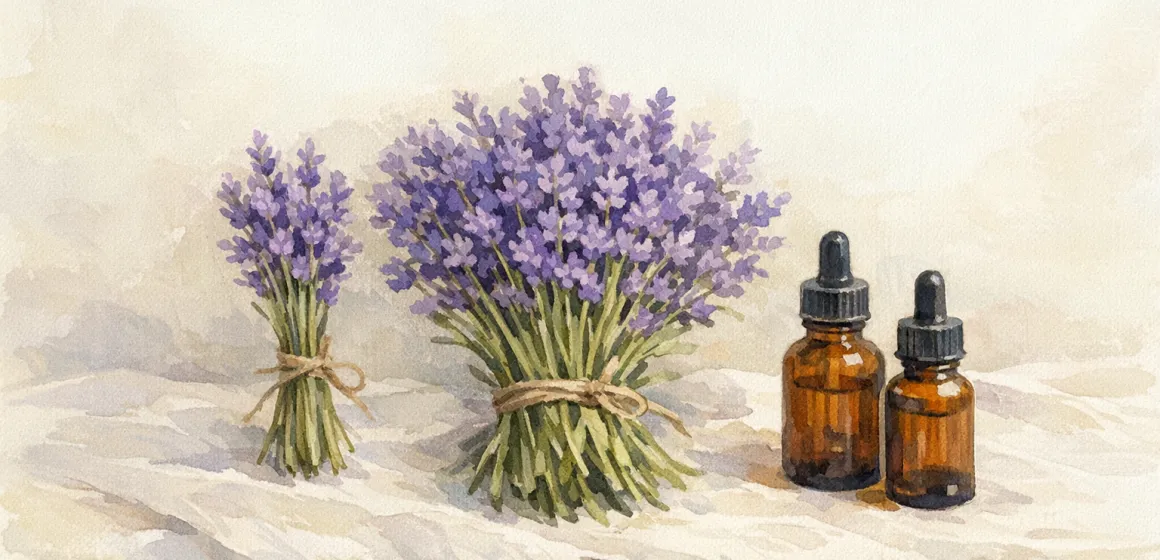
On a label, “lavender” and “lavandin” look alike. In the fields of Provence, the two look alike too: the same purple spikes, the same family resemblance. Yet they are not the same plant.
What can be said about the plants
True lavender has the Latin name Lavandula angustifolia. Lavandin is called Lavandula × intermedia (on labels, you read Lavandula hybrida): it is an aromatic subshrub resulting from a natural cross between true lavender (Lavandula angustifolia) and spike lavender (Lavandula latifolia). Lavandin is widely grown in Provence. Botanists and distillers describe other differences (growing altitude, size of the plant, composition of the oil): we do not repeat them here without a solid source.
What our product pages say
What can be read without risk of error is the ingredient list of our products:
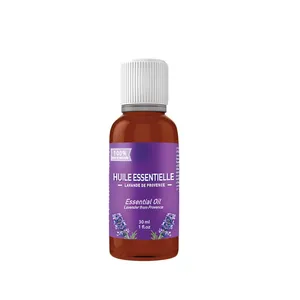
- the 30 ml lavender essential oil lists Lavandula angustifolia oil;
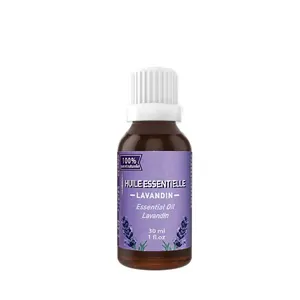
- the lavandin essential oil lists Lavandula hybrida oil;
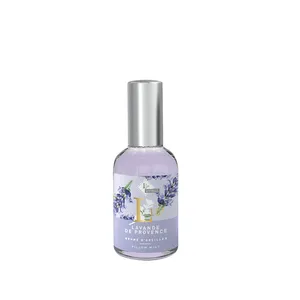
- the lavender pillow mist and the lavender room fragrance also contain lavandin oil (Lavandula hybrida oil).
In other words: a “lavender” product is not necessarily made with true lavender. The Latin name in the ingredient list tells you which.
02 / Compare
How to choose?
For the essential oil
Both oils are used in the same ways, as our product pages describe them: in a diffuser (a few drops), for massage diluted in a vegetable oil, or in homemade preparations. The difference therefore lies first in the plant and in the scent, which is a matter of taste: the simplest way is to smell both.
For the home
If you simply want to scent a room or linen, a ready-to-use product is enough: pillow mist for bedding, room fragrance for rooms. You then do not have to handle any essential oil.
03 / Use
Using an essential oil with care
An essential oil is a concentrated product. Here are the precautions for use that come up on our product pages; always read the one for the product you choose:
- never use it undiluted on the skin: always dilute it in a vegetable oil;
- do not swallow it;
- keep out of reach of children;
- not recommended for pregnant or breastfeeding women and young children, unless medically advised;
- in case of contact with the eyes, rinse thoroughly with clean water; in case of irritation or skin rash, consult a doctor;
- store away from light and heat;
- it is harmful to aquatic organisms.
Our four essential oil product pages give the same minimum age: not before 3 years old. Always refer to the page of the product you choose.
04 / Continue
Going further
Find the essential oils and pillow mists in the Wellbeing & sleep collection.