01 / Compare
Three milks, one use
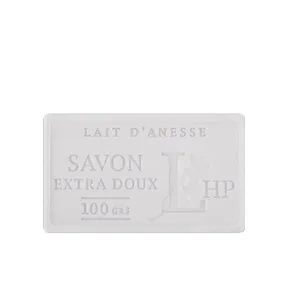
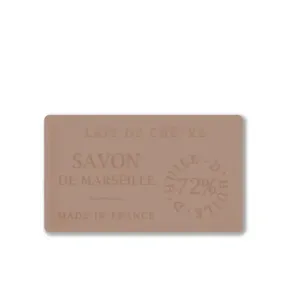
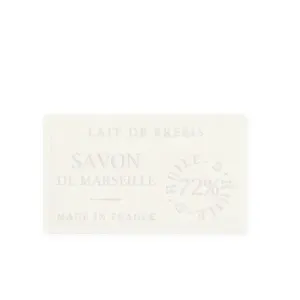
Donkey milk, goat milk and sheep milk are the three milks found in our 100 g soaps. They come as a solid bar, are worked into a lather in your hands or on a washcloth, then rinsed, and their product pages state that they can be used on the face as well as on the body. A legitimate question remains: what changes from one soap to another?
What really changes
Reading their product pages, three differences stand out:
- the animal the milk comes from, which appears in the ingredient list (donkey milk, goat milk, sheep milk);
- the fragrance: each soap contains fragrance components that must be declared, and they are not the same;
- the manufacture of the goat milk soap, presented as superfatted.
The place of the milk in the list
In all three soaps, the milk does not come first in the ingredient list: it appears after the soap bases, the water and the salt, and even after the fragrance components for the goat milk soap. As the list is in descending order of concentration, milk is not a main ingredient; the list does not, however, let you know its exact proportion.
What we are not saying
We promise nothing about the skin. The effect of a soap depends on each person, on their routine and on much else. Our product pages make no comparison such as “gentler” or “more nourishing”, and we will not do so without a solid source.
02 / Read
Reading the product pages side by side
Donkey milk
The ingredient list of this soap mentions donkey milk (donkey milk) and glycerin, with several fragrance components that must be declared, including linalool, hexyl cinnamal and citronellol.
Goat milk
This soap is presented as superfatted: it is made with more fat than is needed to obtain the soap. Its list mentions goat milk (goat milk), glycerin and fragrance components that must be declared: coumarin, linalool, limonene and geraniol. Its texture is creamy.
Sheep milk
Its list mentions sheep milk (sheep milk), glycerin and fragrance components that must be declared: linalool, hexyl cinnamal, citronellol and alpha-isomethyl ionone.
What they have in common
The three soaps are made by Montaud SAS, in Vaison-la-Romaine, in Provence, and are composed of the same soap bases (sodium palmate, sodium palm kernelate) and water.
03 / Choose
How to choose?
Rather than looking for the “best” milk, choose on criteria you can check:
- the ingredient list: if you avoid a particular fragrance component, check that it is not in it;
- the precautions on the product page, which are not identical for the three soaps;
- your preference: curiosity about a particular milk is a perfectly valid reason.
The precautions to read
The product pages remind you that the soaps must not be swallowed and are kept out of the reach of children. Some pages also point out that they may cause a skin allergy or ask you to stop using the soap in case of irritation. These statements are not the same on the three pages: read the one for the soap you choose.
A tip to make them last
Whichever soap you choose, place it on a soap dish so that it stays dry between uses: it keeps longer.
04 / Continue
Going further
Find our 100 g soaps in the Bath & care collection.